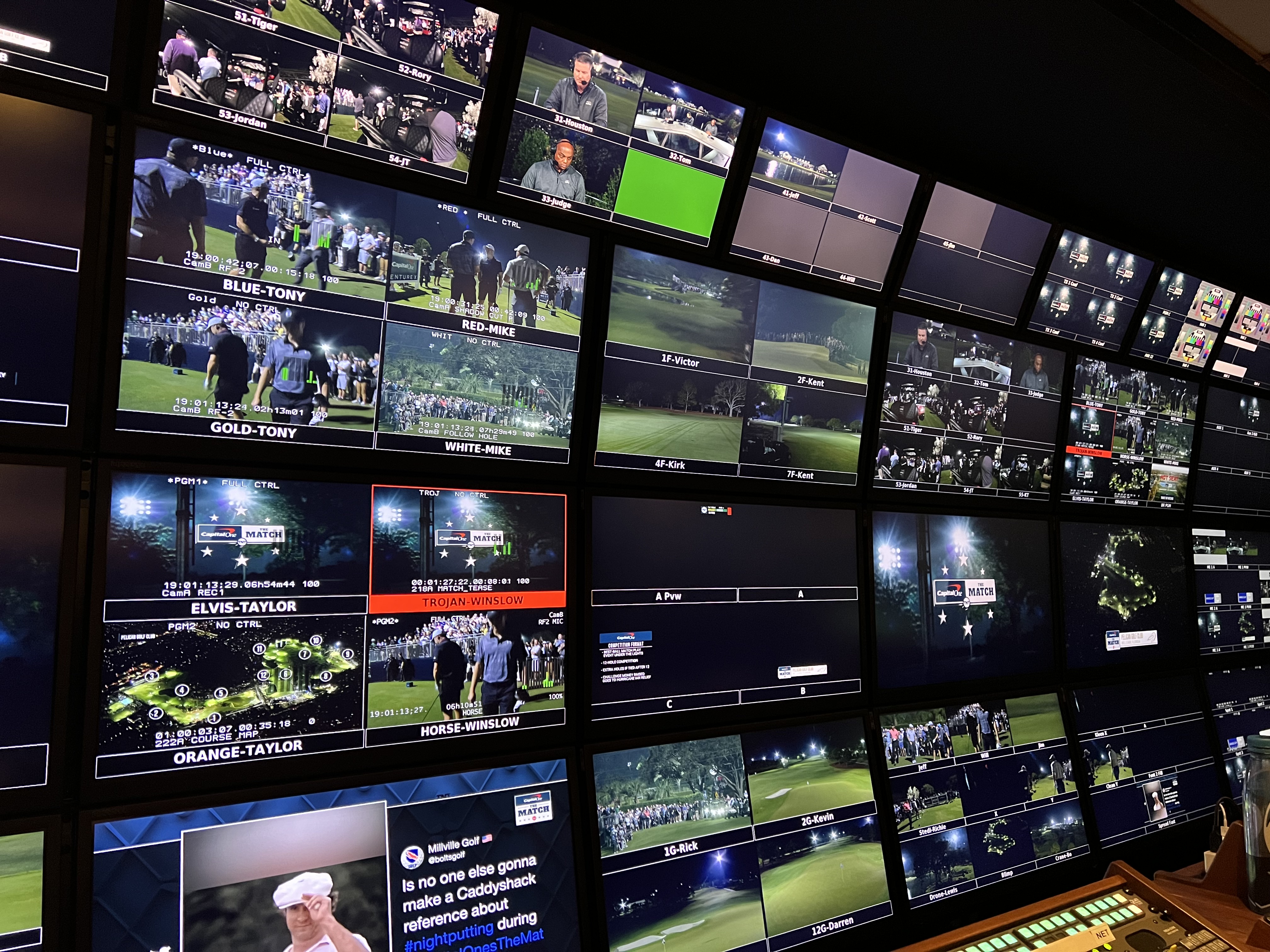
By Lesley Young, Founder & Executive Producer, Greyline Media
Fall is my favorite kind of busy. Right now, the Greyline team is deep in prep for the Tampa Bay Sun FC’s fall season — working through broadcast deliverables, mapping out distribution, and building the crews who will make every home match look and feel like the big-league product this club deserves. At the same time, we’re planning a featured-hole livestream for championship golf. Different sports, different platforms, same job: tell the story right.
And in almost every production meeting, vendor call, and industry panel this year, there’s been a second conversation running underneath the first one: AI.
If you work in sports production and you’re not thinking about it, you’re behind. If you’re only thinking about it, you’re missing the point.
Let’s give credit where it’s due. AI has done something remarkable for sports coverage: it lowered the cost floor. Automated camera systems can now stream a match that would have gone completely uncovered five years ago. AI tools are quietly taking over the work that used to eat crew hours — logging, clipping, metadata tagging, quality monitoring, reformatting one broadcast into a dozen deliverables for a dozen platforms.
For emerging leagues and women’s sports especially, this matters. I’ve spent much of my career in that space — from helping produce ‘On Her Turf’ during the Tokyo Olympics to our work in the Gainbridge Super League today. For decades, the biggest barrier to covering women’s sports wasn’t audience demand. It was production cost. Anything that shrinks that barrier is a win, full stop. The industry conversation has caught up to this, too — there’s a good ongoing series on how data and automation are changing sports coverage over at NewscastStudio if you want the deeper dive.
Here’s where I’ll push back on the hype.
An automated camera can follow the ball. It cannot know that the story of tonight’s match is a keeper making her first start since surgery, or a rookie whose entire family flew in and is sitting in row four. It doesn’t know when to stay wide and let a stadium breathe, or when to cut to the bench because the bench is the story. It has never once found the shot that makes a stranger care.
And for a league or a team trying to prove it belongs — that its athletes deserve prime time — “good enough” coverage quietly argues the opposite. Broadcast quality is a statement. It tells your athletes, your sponsors, and your fans exactly how much you believe your product is worth. That’s why the Sun’s matches need to look like they belong next to anything else on a national streaming platform. Because they do.
Here’s how we think about it at Greyline: AI gets the repetitive work, and humans keep the editorial. That’s not a compromise — it’s the whole strategy. Every hour a tool saves us on logging and clipping is an hour our producers spend on the things that actually move an audience: story development, access, relationships, the pre-production homework that makes a live moment land.
The best broadcasts have always been made twice — once in planning and once in the truck. AI is starting to genuinely help with the first one. The second one is judgment, taste, and trust between people who’ve done hard live television together. I’ve watched that chemistry save shows. No orchestration layer replicates it.
Audiences are getting sharper about this, not duller. Fans can feel the difference between content that was lived and content that was generated — and the more AI-made material floods their feeds, the more valuable the real thing becomes.
Authenticity is becoming the scarcest asset in sports media.
So no, I don’t think AI is coming for what we do. I think it just clarified it. The tools will keep getting better, and we’ll keep adopting the ones that make our crews faster and our coverage stronger. But the reason a broadcast makes you feel something will stay stubbornly human.
This fall, when you catch a Sun FC match or a golf livestream we’ve produced, somewhere behind every shot is a person who made a choice — about what the story was and how to tell it. That’s the grey line between coverage and storytelling. It’s where we’ve always lived, and it’s not going anywhere.
If you’re a team, league, or brand trying to figure out what AI means for your content strategy — that’s a conversation I love having. Reach out anytime.